

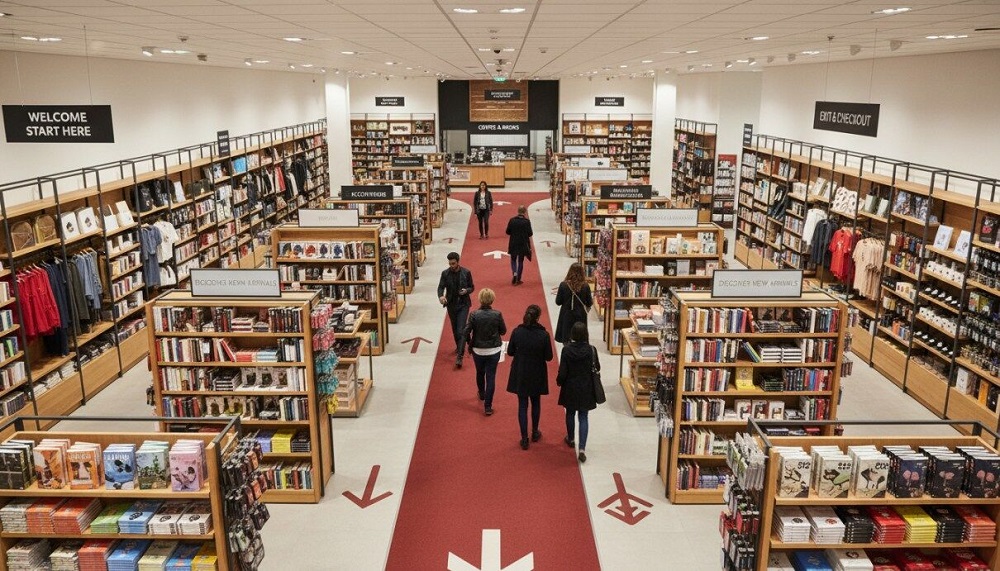
Store layout plays a powerful role in shaping how customers move, what they notice, and ultimately what they buy. Retailers carefully design floor plans, shelf placements, and product displays to guide shoppers through a store in ways that maximize engagement and purchases.
A well-designed layout does more than organize merchandise. It influences customer psychology, improves product visibility, and encourages impulse buying. Understanding how store layouts affect shopping behavior helps businesses increase sales while improving the customer experience.
What Is a Store Layout?
A store layout refers to the physical arrangement of a retail space. It includes:
- Placement of aisles and walkways
- Location of shelves, displays, and checkout counters
- Product organization and category grouping
- Customer traffic flow within the store
The goal is to create a shopping environment that is easy to navigate, visually appealing, and strategically optimized for sales.
Retailers combine design principles with consumer psychology to determine how customers move through the store and what catches their attention.
Why Store Layout Matters in Retail
Store layout directly impacts customer behavior, dwell time, and purchase decisions. When shoppers move comfortably through a store and discover products naturally, they tend to buy more.
Key reasons layout matters include:
- Improved product visibility – Strategic placement ensures customers see more items.
- Encourages exploration – Thoughtful pathways guide shoppers through multiple sections.
- Supports impulse purchases – Eye-catching displays trigger unplanned buying.
- Enhances shopping experience – A clean, logical layout reduces frustration.
- Increases time spent in store – The longer customers stay, the more they buy.
Retailers often treat layout design as a core marketing strategy rather than just interior design.
Common Types of Store Layouts
Different store formats use different layouts depending on product variety, store size, and customer flow patterns.
1. Grid Layout
The grid layout is one of the most widely used designs in supermarkets, pharmacies, and convenience stores.
Characteristics:
- Long parallel aisles
- Products organized in straight rows
- Efficient space utilization
Benefits:
- Easy navigation for customers
- High product visibility
- Efficient stocking and inventory management
However, it can feel repetitive and less visually exciting compared to other layouts.
2. Loop (Racetrack) Layout
The loop layout creates a circular path that guides shoppers around the store.
Key features:
- A main pathway surrounding the store
- Departments placed along the loop
- Strategic product displays along the route
Advantages:
- Encourages customers to see more products
- Improves store exploration
- Supports cross-selling opportunities
Furniture stores and large department stores commonly use this layout.
3. Free-Flow Layout
The free-flow layout uses a more creative and open design often seen in boutiques and specialty stores.
Features include:
- Curved pathways
- Flexible display arrangements
- Decorative merchandising elements
Benefits:
- Encourages browsing
- Creates a relaxed shopping environment
- Highlights featured products
Because it focuses on experience rather than efficiency, it works best for stores with fewer product categories.
How Layout Design Influences Customer Behavior
Store layouts subtly guide shoppers’ actions and decision-making processes.
Customer Traffic Flow
Retailers design entrances and pathways to control how shoppers move through the store.
Common strategies include:
- Placing high-demand products at the back to encourage movement through aisles
- Creating wide main aisles with smaller secondary aisles
- Positioning attractive displays along key pathways
This encourages customers to walk past more products before reaching their intended items.
Product Placement Strategy
Where products are placed has a major impact on purchasing decisions.
Retailers often use:
- Eye-level shelves for high-margin products
- End-cap displays to highlight promotions
- Checkout displays for impulse purchases
Products placed in high-visibility areas tend to sell significantly more.
Psychological Shopping Cues
Store layout also triggers psychological responses that influence buying behavior.
Examples include:
- Warm lighting and clear signage that create a comfortable atmosphere
- Logical product grouping that simplifies decision making
- Open spaces that reduce shopper stress
These design elements make customers feel relaxed, increasing the likelihood of longer visits and additional purchases.
Key Layout Elements That Increase Sales
Retailers optimize several design components to influence purchasing patterns.
Strategic Entrance Design
The first few steps inside a store are known as the transition zone. During this moment, shoppers adjust to the new environment.
Effective entrance design includes:
- Clear signage
- Eye-catching displays
- Space that allows customers to orient themselves
Power Walls
A power wall is the first display customers see when entering the store.
Retailers use it to showcase:
- New arrivals
- Best-selling products
- Seasonal promotions
This area strongly shapes the customer’s first impression.
Impulse Zones
Retailers often place small, inexpensive items near checkout counters.
Common impulse products include:
- Snacks and beverages
- Small accessories
- Limited-time offers
These areas are designed to capture purchases made without prior planning.
Technology and Modern Store Layout Strategies
Modern retailers are increasingly using data and technology to optimize store layouts.
Advanced techniques include:
- Heat-mapping tools that track customer movement
- AI-powered retail analytics to analyze shopper behavior
- Digital shelf labels for dynamic product placement
These technologies allow retailers to continuously adjust layouts based on real customer data.
Best Practices for Effective Store Layout Design
Businesses can improve store performance by following proven layout principles.
Important strategies include:
- Keep the layout simple and easy to navigate
- Use clear signage and category organization
- Highlight promotional products in high-traffic areas
- Ensure aisles are wide enough for comfortable movement
- Refresh displays regularly to maintain customer interest
A well-designed layout balances customer convenience with strategic merchandising.
Conclusion
Store layout is far more than a visual design choice—it is a powerful retail strategy that shapes customer behavior and purchasing decisions. By carefully planning product placement, traffic flow, and visual displays, retailers can guide shoppers through the store while increasing engagement and sales.
Businesses that continuously analyze and refine their layouts create more enjoyable shopping experiences and ultimately achieve higher customer satisfaction and stronger revenue growth.
Frequently Asked Questions (FAQs)
1. How does store layout affect customer purchasing behavior?
Store layout guides how customers move through the store, what products they see, and how long they stay. Strategic layouts increase product exposure and encourage impulse purchases.
2. What is the most common retail store layout?
The grid layout is the most common design, especially in supermarkets and convenience stores, because it maximizes space and makes inventory organization easier.
3. Why are essential products placed at the back of stores?
Retailers place everyday items like milk or bread at the back to encourage customers to walk through multiple aisles, increasing the chances of additional purchases.
4. What is an end-cap display in retail?
An end-cap display is a product display placed at the end of an aisle. It attracts attention and is often used for promotions or high-margin products.
5. How do retailers use psychology in store layouts?
Retailers use lighting, color, product placement, and navigation patterns to create a comfortable environment that encourages browsing and purchasing.
6. What is a racetrack layout in retail?
A racetrack layout creates a circular path that guides customers around the store, ensuring they pass by multiple product categories before reaching the checkout.
7. How can small stores optimize their layouts?
Small stores can improve layouts by using vertical displays, clear product organization, strategic lighting, and focused product zones to maximize space and visibility.

Comments are closed.