

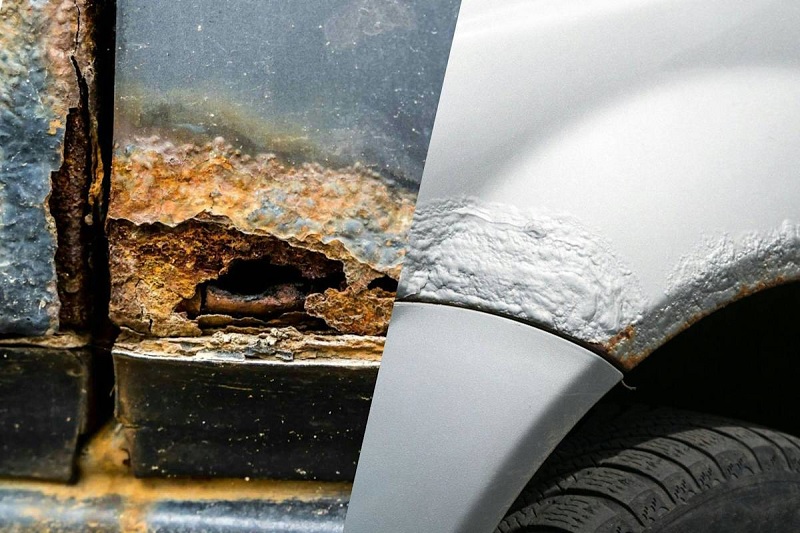
Winter brings a specific kind of dread for car enthusiasts and daily commuters alike. While the first snowfall transforms landscapes into picturesque winter wonderlands, it triggers a far more sinister chemical reaction on the blacktop below. Municipalities deploy tons of rock salt and chemical de-icers to keep highways clear and prevent deadly ice patches. For your vehicle, however, that salt spray is an aggressive, silent executioner.
If you live in the snow belt, you have likely walked past a vehicle with bubbly paint along the bottom doors or gaping, rusted holes where the metal used to be solid. That is not just superficial cosmetic wear. That is structural decay, eating away at the very bones of the automobile. The rocker panels and frame rails are particularly vulnerable to this winter assault. Understanding how road salt transforms your car from the inside out, knowing where to look for hidden damage, and learning how to intervene before it is too late can save your vehicle from an untimely trip to the scrapyard.
The Chemistry of Decay: Why Road Salt Is Lethal to Steel
To understand why winter roads are so destructive, you have to look at the chemistry happening beneath your car. Rust, or iron oxide, is born when iron, oxygen, and moisture come into contact. Under normal conditions, this process happens relatively slowly. Water acts as a mild electrolyte, but pure water alone takes a long time to aggressively corrode thick automotive steel.
Road salt changes that equation entirely. When sodium chloride or calcium chloride dissolves in melted snow and slush, it creates a highly conductive brine solution. This brine dramatically lowers the electrical resistance of the moisture, turning it into a powerful electrolyte that accelerates oxidation exponentially.
Furthermore, modern winter road treatments do not stop at rock salt. Many highway departments use liquid magnesium chloride or organic beet juice additives mixed with brine. These chemical concoctions are specifically engineered to stick to vehicle undercarriages longer. When this sticky, salty mixture splashes up into the hidden cavities of your car, it clings relentlessly, keeping a moist, highly corrosive film in contact with bare metal days after the snow has melted and the roads have dried.
The Anatomy of Vulnerability: Why Rocker Panels and Frames Suffer Most
Not all parts of a car are equally susceptible to rust. A polished aluminum hood or a galvanized steel door skin can resist corrosion for years. The rocker panels and frame rails, however, live in an absolute war zone of moisture, impact, and trapped debris.
The Trapped Moisture Trap of Rocker Panels
Rocker panels are the structural steel beams running horizontally directly beneath the doors of your vehicle, connecting the front and rear wheel wells. Structurally, they are designed as hollow box chambers. This enclosed design provides immense torsional rigidity to keep the chassis from twisting, but it creates a disastrous environment for moisture retention.
As you drive through slush and spray, your tires kick up a continuous barrage of salt water. This water enters the rocker panel through factory drain holes, unsealed seams, or microscopic cracks in the undercoating. Once inside, the salt water mixes with organic debris like leaves, dirt, and road grime that also finds its way into the cavity. This debris forms a damp, acidic sludge that settles at the bottom of the chamber. Because rocker panels are completely enclosed and lack direct airflow, that salty sludge stays wet for weeks, eating away at the interior sheet metal long after the exterior of the car looks clean.
The Structural Threat to Frame Rails
While rusty rocker panels look ugly and can cause a car to fail a state safety inspection, a compromised frame is an immediate threat to life and limb. The frame rails form the skeletal backbone of a vehicle, supporting the engine, transmission, suspension mounting points, and crash-absorption zones.
Frames are typically constructed from heavy-gauge stamped steel channels welded together into box sections. Like rocker panels, they feature internal cavities that trap moisture and road salt. When rust attacks a frame rail, it does not just pit the surface; it delaminates the thick steel from the inside out. By the time you notice brown flaky scales on the outside of a frame rail, the structural integrity of the metal may already be severely compromised, turning a once-rigid safety cage into a brittle hazard.
Spotting Hidden Rust Before It Perforates
The most insidious aspect of rust is its tendency to develop out of sight. By the time corrosion bubbles through your paint or punches a hole through the sheet metal, the damage is already advanced. Catching rust early requires knowing where and how to look.
The Bubble and the Crunch
On exterior rocker panels, rust usually starts from the inside and pushes outward. If you run your fingers along the bottom edge of the rocker panel and feel small, raised bumps under the paint, you are feeling iron oxide expanding beneath the surface. If you press on those spots and hear a crunchy sound or feel the metal give way under your thumb, the steel has already been completely perforated.
Probing the Underbody
To inspect your frame rails, you need to get down on the ground with a flashlight and a sturdy flat-head screwdriver. Walk around the vehicle and look at where the suspension components bolt to the frame. Tap gently on the frame rails with the handle of the screwdriver or the back of a small hammer. Solid, healthy steel will produce a sharp, metallic ping and feel completely unyielding. Rusted, compromised steel will produce a dull thud, and if the screwdriver punches straight through the metal, your frame has suffered catastrophic structural failure.
Prevention and Mitigation: Stopping Rust in Its Tracks
While you cannot control winter weather or municipal road maintenance, you are not entirely powerless against the march of corrosion. Preventing rust requires a proactive, multi-layered defense strategy.
The Power of Underbody Washing
The single most effective weapon against road salt is dilution and removal. During the winter months, make frequent trips to a touchless car wash that features an undercarriage flush. When temperatures rise above freezing, wash your car thoroughly, making sure the spray jets sweep along the bottom edges of the doors and up into the wheel wells where salt accumulates. If you wash at home, use an angled hose attachment to blast out the interior cavities of your frame rails and rocker panels through their factory drain holes.
Professional Rustproofing and Cavity Waxing
Factory anti-corrosion treatments are good, but they are rarely foolproof, especially on older vehicles. Investing in an aftermarket professional rustproofing treatment can make a dramatic difference.
Avoid the old-school hard asphalt or rubberized undercoatings from decades past. While they looked thick and protective, they could actually trap moisture underneath them if they cracked, accelerating hidden rust. Modern rustproofing relies on petroleum-based cavity waxes and creep oils. These specialized formulations never fully dry; instead, they remain fluid, actively creeping into seams, overlapping joints, and interior frame cavities. When this oily wax encounters road salt and moisture, it acts as an impenetrable hydrophobic barrier, sealing the bare metal away from oxygen and water entirely.
Repairing Existing Damage
If you catch rust early—while it is still confined to surface scaling or minor bubbling on a rocker panel—you can stop it in its tracks. Grind away the affected area down to bare, shiny metal using a wire wheel or abrasive disc. Treat the fresh metal with a chemical rust converter that neutralizes remaining microscopic oxidation, apply an epoxy primer, and seal it with touch-up paint. However, if rust has eaten completely through a structural frame rail or a primary rocker panel, cosmetic patches will not suffice. You will need to take the vehicle to a professional body shop for certified metal fabrication, where the rotted sections are cut out and fresh steel is welded back into place.
Road salt is a necessary evil of winter driving, but it does not have to be a death sentence for your car. By understanding how hidden corrosion quietly destroys rocker panels and frame rails, committing to diligent winter wash routines, and applying modern cavity wax treatments, you can protect the structural integrity of your vehicle and keep it rolling safely for years to come.

Comments are closed.