

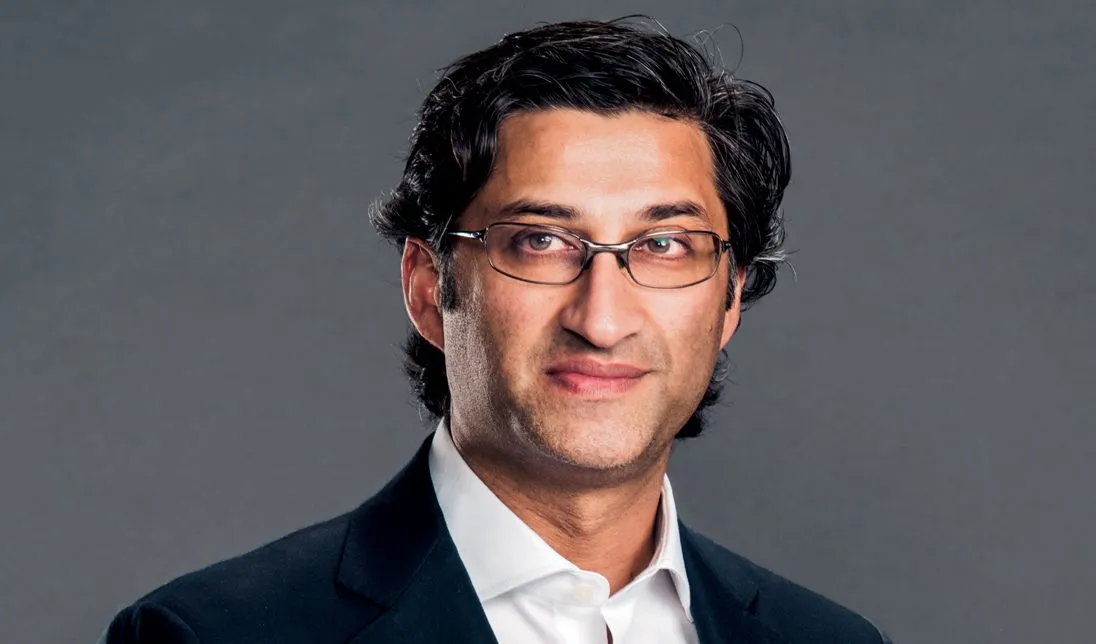
Asif Kapadia has established himself as one of the most innovative directors working today, reshaping the boundaries of documentary filmmaking. His projects have consistently challenged what nonfiction cinema can look like, balancing meticulous research with daring formal experimentation. From the celebrated trilogy of Senna, Amy, and Diego Maradona to the ambitious hybrid 2073, he has proven that the documentary form can be as gripping and layered as any narrative film.
His reputation first grew through Senna, which avoided conventional interviews in favor of building an immersive narrative entirely from archival footage. The effect was immediate and emotional, transforming the life of Ayrton Senna into a cinematic experience that felt less like a retelling and more like an unfolding drama. Amy developed this approach further, using home videos, handwritten lyrics, and personal recordings to recover Amy Winehouse’s voice and artistry, often lost beneath tabloid coverage. Diego Maradona extended the method into a portrait that resembled a gangster epic, showing the chaos of stardom and its toll. In each case, Asif Kapadia demonstrated how careful curation of existing material could achieve profound storytelling without invention.
2073 marked a new stage in his craft. For the first time, Asif Kapadia applied his documentary methods to a speculative future, blending real news clips and phone videos with dramatized sequences staged through advanced LED technology. Samantha Morton’s portrayal of Ghost connected these strands into a haunting story of survival in an imagined world that felt deeply anchored in our present crises. Climate disasters, surveillance technologies, and authoritarian politics appeared not as distant possibilities but as extensions of what audiences already recognize. This merging of fiction and non-fiction became a striking way of visualizing how fragile the present moment truly is.
Collaboration has always been central to his process. Asif Kapadia enlisted Chris King and Sylvie Landra as editors on 2073, dividing documentary and dramatized material to preserve distinct textures. Bradford Young’s cinematography unified the disparate elements, while the sound design incorporated both electronic atmospheres and orchestral compositions. Together, these contributions created a film that maintained his trademark authenticity while embracing speculative imagination. This dual structure represents a natural extension of the collaborative ethos that has shaped his entire career.
What is striking about Asif Kapadia’s films is their ability to resonate differently across audiences. In Europe, screenings of 2073 sparked conversations about climate disasters, while American audiences focused on themes of democracy and surveillance. In other regions, responses centered on displacement, inequality, or the erosion of freedoms. This variety of interpretations reflects his capacity to create works that are not prescriptive but reflective, allowing viewers to find their own experiences mirrored within the material.
Beyond technique, Asif Kapadia’s films carry a philosophical weight. They reveal how memory is constructed, how events are archived, and how cultural icons or political movements can be understood only when patterns are connected across fragments. In earlier works, this meant restoring the humanity of public figures. In 2073, it became an exploration of how present-day images can be reframed as warnings of what lies ahead. His trajectory illustrates that documentary is not just about recording history but about confronting the choices shaping our collective future.

Comments are closed.